How do last rites differ across religions in India?
The biggest differences are cremation or burial, how soon the farewell happens, and when the family gathers to remember. The table below shows common practice. It is a map, not a rulebook: your own family's custom always comes first.
Swipe sideways to see the full table →
| Faith | Usually | Typical timing | Who leads | Remembrance gathering |
|---|---|---|---|---|
| Hindu | Cremation (some sects and many sadhus are buried) | Within about a day | A chief mourner, guided by the family priest | Chautha or uthala (around day 4) in many Punjabi families; terahvi (day 13) in many North Indian families |
| Muslim | Burial; cremation is not permitted | Often within 24 hours | The imam leads the janaza namaz | Teeja or soyem (day 3) and chehlum (day 40) in many South Asian families; others prefer quiet dua and charity |
| Sikh | Cremation preferred; another dignified method such as burial if cremation is not possible | Often the same day or the next | The granthi and sangat; a close relative or friend lights the pyre | Bhog and antim ardas, ideally around day 10 |
| Christian | Burial; cremation permitted by Catholic and most Protestant churches, Orthodox churches generally ask for burial | Often within one to three days | The parish priest or pastor | Memorial prayer or Mass; many Catholic families mark day 30, many Orthodox families day 40 |
| Jain | Cremation | Within a day, and many avoid cremating after sunset | The family, with the sangh; an elder may lead a shanti path | A prayer meeting, often called an uthamna in many Shwetambar families |
Source: Eternal Repos faith guides, drawing on the Sikh Rehat Maryada, the Holy See (2016) and community sources
What happens in each tradition, from the first hours to remembrance?
Read each column top to bottom: the first hours, the day of farewell, the days that follow and later remembrance. Many families follow only part of this, or follow it on different days.
Five farewells, side by side (common practice, with variation)
Hindu
antim sanskar
- First hoursClose family bathe and dress your loved one. A lamp is often lit near the head.
- Day of farewellProcession to the cremation ground. The chief mourner gives mukhagni; many traditions add kapal kriya.
- Day 3–4The ashes are gathered (asthi sanchay), and many Punjabi families hold the chautha.
- By day 10Many families immerse the ashes in the Ganga or another river. Dashgatra and pind daan follow.
- Day 13Terahvi in many North Indian families: a havan, a shared meal and the end of sutak.
- Every yearRemembered as an ancestor in shraddha, including during Pitru Paksha.
Muslim
janaza
- First hoursEyes closed, body covered with a clean sheet, the masjid or imam informed.
- Before the prayerGhusl by family or volunteers of the same gender, then a plain white kafan.
- Day of farewellThe janaza namaz, offered standing, then burial in a qabristan, laid facing the qibla.
- Days 1–3Mourning is commonly three days; neighbours and relatives bring food.
- Day 40Chehlum in many South Asian families. A widow observes iddat of four lunar months and ten days.
Sikh
antim sanskar
- First hoursFamily recite Gurbani or Waheguru and inform the gurdwara. The Rehat Maryada asks mourners not to wail.
- Before leavingIshnaan and clean clothes. For an amritdhari Sikh, the five Ks stay on. Ardas is offered.
- Day of farewellA close relative lights the pyre; the sangat recites Kirtan Sohila, then Ardas.
- AshesImmersed in flowing water or buried, with no memorial at the cremation site.
- Around day 10A Sahaj Path or Akhand Path ends in the bhog and antim ardas, with kirtan and langar.
Christian
funeral service
- First hoursPrayers at home or the hospital chapel. The parish priest or pastor is the first call.
- Day 1–3A funeral Mass for Catholic families; hymns, readings, a sermon and prayers in many Protestant churches.
- CommittalBurial at the cemetery with committal prayers, or cremation where the church permits it.
- Weeks afterA memorial prayer or Mass. Many Catholic families mark the 30th day, many Orthodox families the 40th.
- Every yearAnniversaries, All Souls' Day on 2 November, and visits to the grave.
Jain
a simple farewell
- First hoursThe Namokar Mantra is recited; some ask forgiveness (kshamapana). The sangh is informed.
- PreparationBathed and dressed simply. Many families avoid fresh flowers, out of care for non-violence.
- Day of farewellA prompt cremation, often before sunset. A close relative lights the pyre or starts the furnace.
- AshesSome families bury them, some immerse them, and some do not collect them.
- Days afterA prayer meeting, often an uthamna; celebrations are postponed, and charity is given in their name.
Which days and timings matter in each faith?
A few numbers recur across traditions. They are guides drawn from common practice, not deadlines, and your elders or faith leader will know your family's own days.
~24 hrs
Muslim burial is often completed within a day
Islamic funeral practice
Day 3–4
Hindu families commonly gather the ashes
Indian rituals after death
Day 10
Sikh Rehat Maryada: Sahaj Path ideally ends around the tenth day
Sikh Rehat Maryada
Day 13
Terahvi closes mourning in many North Indian Hindu families
Indian rituals after death
Day 40
Chehlum in many Muslim families; remembrance in many Orthodox Christian families
Eternal Repos faith guides
21 days
For every faith: register the death within 21 days
RBD Act, 1969
How do remembrance gatherings differ?
Almost every community holds some gathering in the days after a death, where friends and colleagues can pay respects. What it is called, and when, depends on faith and region.
Common remembrance gatherings after a death
- Day 3
Teeja or soyem
A third-day gathering in many South Asian Muslim families. Many also hold a Quran khwani.
- Day 4
Chautha or uthala
Common in Punjabi Hindu families, sometimes with the rasam pagdi.
- Around day 10
Bhog and antim ardas
Sikh families close the reading of the Guru Granth Sahib with kirtan, Ardas and langar.
- Day 13
Terahvi
Many North Indian Hindu families hold a havan or prayer meeting.
- Day 30 to 40
Memorial Mass or chehlum
Many Catholic families mark the 30th day; many Orthodox and Muslim families the 40th.
Jain families often hold an uthamna, and many families of every faith now hold a simple prayer meeting that anyone can attend.
What if the family is interfaith or mixed?
Many families in India hold more than one faith. There is no set formula, but a few gentle steps help everyone feel the farewell was right.
- Start with the wishes of the one you've lost, if they shared them.
- Agree early which tradition will guide the farewell itself, since cremation and burial cannot both happen.
- Speak to the faith leader of that tradition. Ask what others in the family may join, and how.
- Let the remembrance be wider. Many families now hold a simple, interfaith prayer meeting so friends of every background feel welcome.
- Choose one calm person to share times and places, so no one feels left out.
How can guests show respect at a farewell of another faith?
Follow the family's lead. Presence matters more than the right words, and no one expects a guest to know every custom.
- Dress simply. Many people wear white or light, muted colours to a prayer meeting; ask a family member if unsure.
- At a gurdwara, cover your head and remove your shoes.
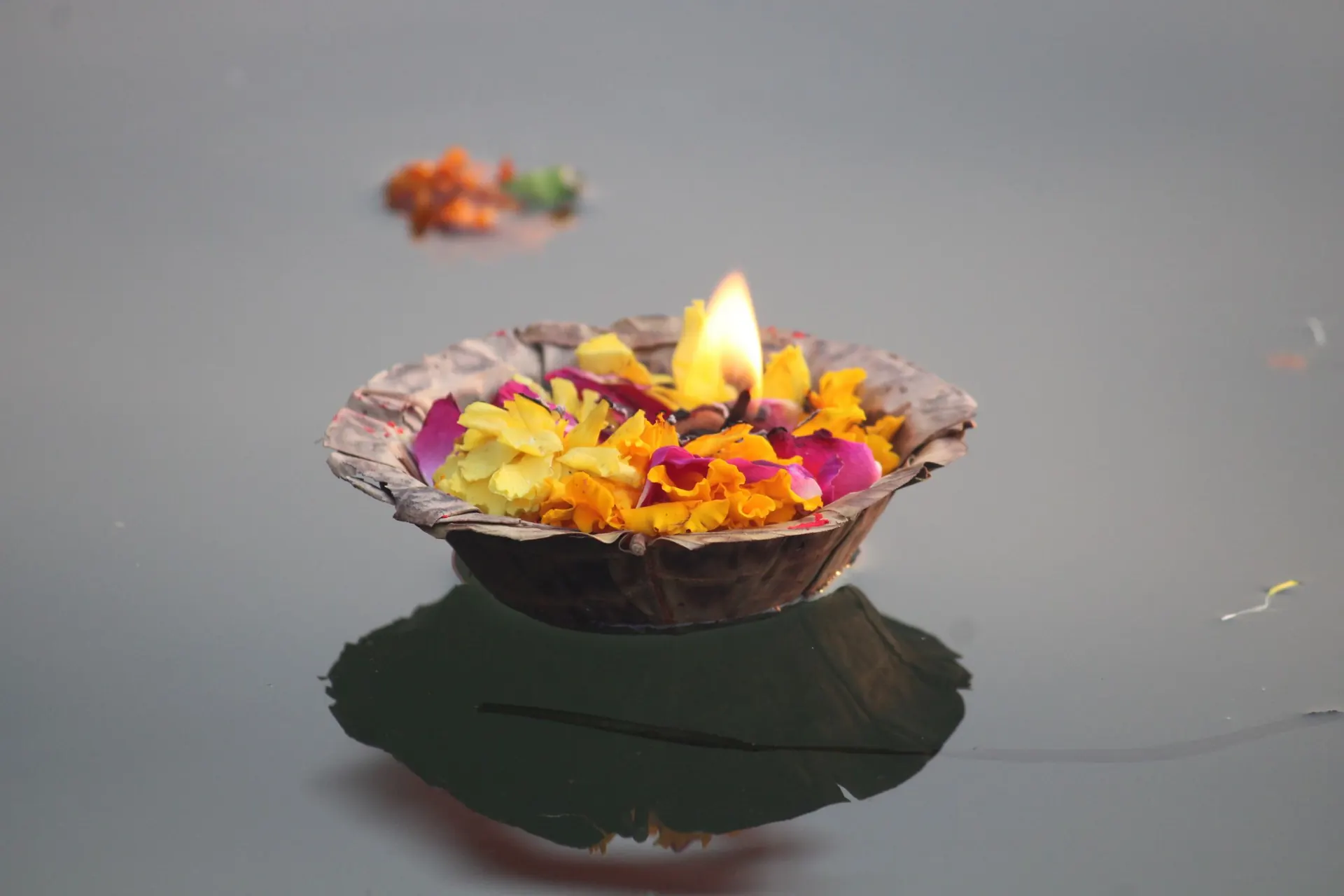
- Do not bring flowers to a Jain family unless they ask. At a church, flowers are welcome at most services.
- At a church service, guests of other faiths are welcome to sit quietly while the congregation stands, sits or kneels.
- Ask before taking photographs or sharing anything online.
“When words fail, we stand beside you.”
— Eternal Repos
We stand beside families of every faith across Delhi NCR, in their own tradition. If you would like us to carry the practical part, call +91 84486 61338, any hour, or see our services.